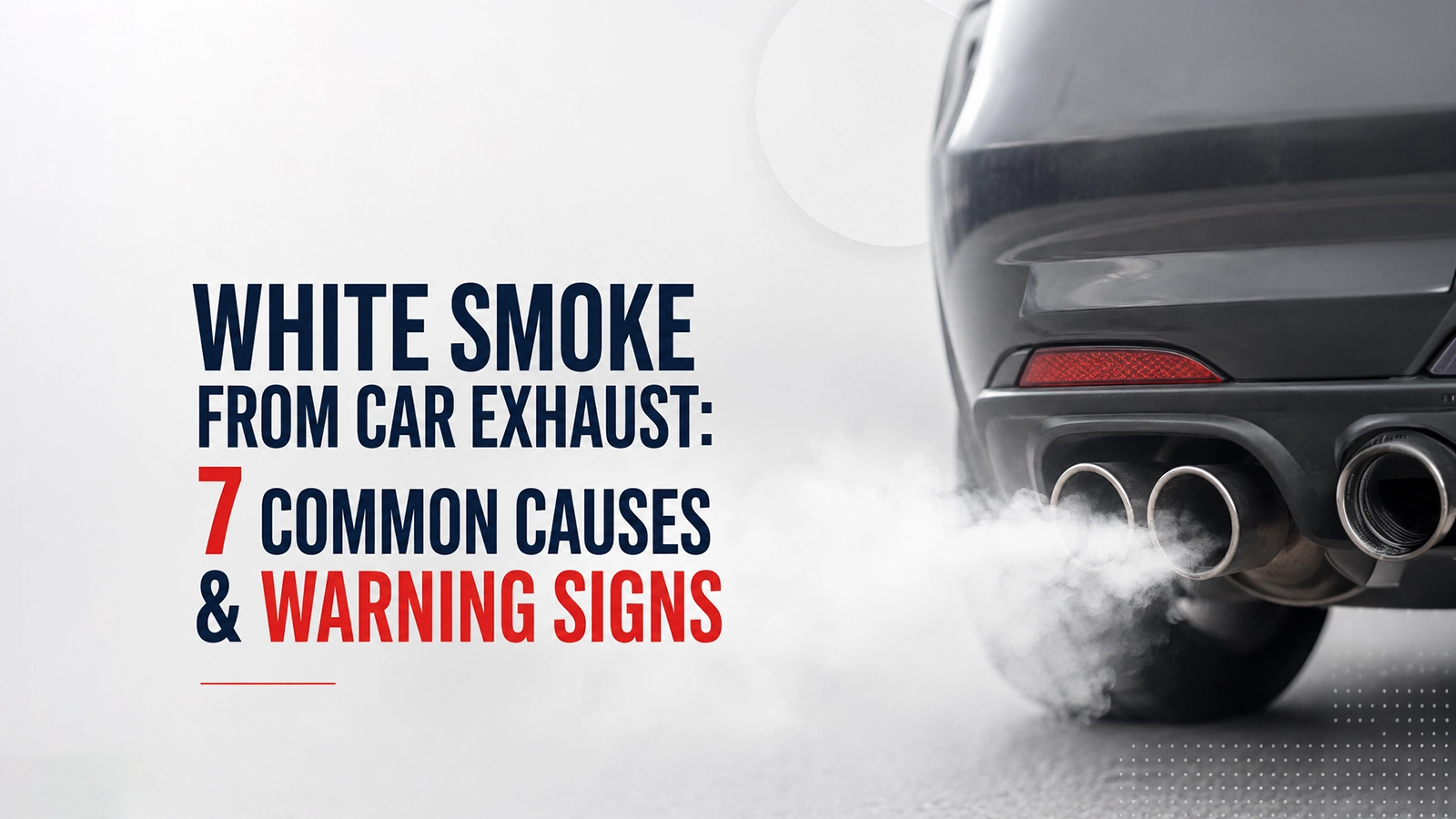
Seeing white smoke from car exhaust can be concerning, especially when the smoke is thick and continues after the engine has warmed up. While a small amount of white vapor can sometimes be normal, persistent or heavy white smoke may indicate a serious engine problem.
White smoke can be caused by coolant entering the combustion chamber, a damaged head gasket, overheating, or other internal engine issues. Ignoring the warning signs could turn a relatively manageable repair into a costly engine problem.
Understanding the possible causes can help you know when your vehicle needs professional inspection.
Is White Smoke From Car Exhaust Always a Problem?
Not necessarily. The first thing to consider is when the smoke appears and how long it lasts.
A small amount of white vapor during a cold start can be normal, particularly when moisture or condensation is present in the exhaust system. It should normally disappear as the engine reaches operating temperature.
However, white smoke from car exhaust that is thick, persistent, or accompanied by other symptoms may require immediate attention.
Look out for:
- Thick white smoke
- Sweet smell from the exhaust
- Engine overheating
- Loss of coolant
- Rough engine performance
- Dashboard warning lights
- Reduced engine power
7 Common Causes of White Smoke From Car Exhaust
1. Coolant Entering the Combustion Chamber
One of the most serious causes of white smoke from car exhaust is coolant entering the combustion chamber.
Normally, coolant remains within the cooling system. If a component fails, coolant can enter areas where it should not be and burn along with the fuel-air mixture.
This can produce thick white smoke from the exhaust.
2. Blown Head Gasket
A blown head gasket can allow coolant to enter the cylinders, producing visible white exhaust smoke.
Other symptoms may include:
- Engine overheating
- Loss of coolant
- Milky engine oil
- Poor engine performance
- Rough idling
Driving with a damaged head gasket can cause further engine damage, so professional diagnosis is recommended.
3. Cracked Cylinder Head
A cracked cylinder head can create a pathway for coolant to enter the combustion chamber.
This problem may result from overheating or significant engine stress. Along with white smoke from car exhaust, you may notice coolant loss, overheating, or poor engine performance.
A professional diagnostic inspection is required to confirm the problem.
4. Cracked Engine Block
Although less common, a cracked engine block can also allow coolant into the combustion chamber.
This is a serious mechanical problem that can affect engine reliability and performance. If thick white smoke continues while driving, the vehicle should be inspected as soon as possible.
5. Engine Overheating
Overheating can damage important engine components, including gaskets, cylinder heads, and other internal parts.
Dubai’s high temperatures can put additional stress on a vehicle’s cooling system. Low coolant levels, radiator problems, damaged hoses, or cooling fan issues can contribute to overheating.
If your vehicle is overheating and producing white smoke, stop driving and arrange a professional inspection.
6. Coolant Leak
A coolant leak may not always be visible from the exhaust itself. However, if coolant reaches the combustion chamber because of an internal engine problem, it can produce noticeable white smoke.
Check for:
- Low coolant levels
- Coolant puddles
- Sweet-smelling exhaust
- Temperature gauge rising
- Frequent need to refill coolant
A coolant leak should be diagnosed quickly to prevent overheating and engine damage.
7. Internal Engine Damage
Persistent white smoke from car exhaust can sometimes indicate broader internal engine problems.
Internal damage may affect combustion, cooling, and lubrication systems. Continuing to drive without identifying the cause can increase repair costs.
Professional diagnostics can help determine whether the issue is related to the head gasket, cylinder head, engine block, cooling system, or another component.
How to Know If White Smoke Is Serious
Not every instance of white exhaust vapor indicates major damage. However, you should take the problem seriously when the smoke is:
- Thick and continuous
- Present after the engine warms up
- Accompanied by overheating
- Accompanied by coolant loss
- Combined with poor engine performance
- Producing a sweet smell
These signs indicate that your vehicle should be inspected by a qualified technician.
Can You Drive With White Smoke From Your Exhaust?
If the smoke is thick and persistent, continuing to drive is not recommended.
A serious cooling or engine problem can worsen while the vehicle is being driven. Engine overheating can result in additional component damage and significantly increase repair costs.
If you notice persistent white smoke from car exhaust, arrange a professional inspection rather than waiting for the problem to become a breakdown.
How Professional Engine Diagnostics Can Help
Identifying the exact cause of exhaust smoke requires more than simply looking at the smoke. Professional technicians can inspect the vehicle’s cooling system, engine components, fluids, and diagnostic data.
Depending on the symptoms, a technician may check:
- Coolant levels and leaks
- Engine oil condition
- Cooling system pressure
- Cylinder compression
- Head gasket condition
- Engine temperature
- Diagnostic fault codes
Accurate diagnosis helps ensure that the correct component is repaired instead of replacing parts unnecessarily.
How to Prevent Serious Engine Problems
Regular maintenance can help reduce the risk of major engine failures.
Check Coolant Regularly
Maintain the recommended coolant level and inspect the cooling system for leaks.
Monitor Engine Temperature
Never ignore an overheating warning or a rising temperature gauge.
Follow Your Service Schedule
Routine engine maintenance helps identify worn components before they fail.
Pay Attention to Warning Signs
Unusual smoke, noises, smells, or changes in performance should be investigated early.
Avoid Driving an Overheating Vehicle
Continuing to drive an overheating vehicle can cause extensive engine damage.
Why Dubai Drivers Should Take White Exhaust Smoke Seriously
Dubai’s hot climate can place additional demands on cooling systems and engine components. Long drives, traffic congestion, and high ambient temperatures can increase the risk of overheating if a vehicle is not properly maintained.
That’s why timely car engine repair Dubai and preventive maintenance are important for keeping your vehicle reliable in demanding conditions.
Conclusion
White smoke from car exhaust can have several causes, ranging from normal condensation during a cold start to serious problems such as a blown head gasket, coolant entering the combustion chamber, or internal engine damage.
If the smoke is thick, persistent, or accompanied by overheating, coolant loss, or poor engine performance, don’t ignore it. Early professional diagnosis can help identify the underlying problem and prevent further engine damage.
Regular maintenance, cooling system inspections, and timely repairs are essential for keeping your engine performing safely and reliably.
Frequently Asked Questions
What does white smoke from car exhaust mean?
Persistent white smoke can indicate coolant entering the combustion chamber or other internal engine problems. However, light vapor during a cold start can sometimes be normal condensation.
Can a blown head gasket cause white smoke?
Yes. A damaged head gasket can allow coolant to enter the combustion chamber, where it burns and produces thick white exhaust smoke.
Is white smoke from the exhaust dangerous?
Persistent thick smoke can indicate a serious engine or cooling system problem. Continuing to drive without diagnosis may result in additional damage.
Can low coolant cause white smoke?
Low coolant itself does not normally create white exhaust smoke, but a coolant leak or internal engine problem that allows coolant into the combustion chamber can cause it.
Should I drive if my car is producing thick white smoke?
It is better to avoid driving until the cause has been diagnosed, particularly if the vehicle is overheating or losing coolant.